


 English
 中文简体
中文简体 Español
 عربى
عربى
A shoe plant moved its toe-cap laminator from EVA mesh to a copolyamide web and lost part of its line speed the same afternoon. The bond was stronger, the machine was not. Nothing about the material changed except its chemistry, and chemistry sets the processing window long before it sets the strength.
Hot melt adhesive chemistry is the study of how a thermoplastic polymer is blended with tackifying resins, waxes and stabilisers so that the blend melts, wets a surface, and locks into a load-bearing bond as it cools. There is no solvent to evaporate and no cross-linking reaction to wait for. Temperature does all the work, which is why a hot melt can bond in under a second and be re-melted years later.
The practical payoff is narrow and specific: polymer polarity, melt viscosity, crystallisation speed and thermal stability explain nearly every weak bond, slow line and summer heat failure you are likely to meet.
Content
- What Hot Melt Adhesive Chemistry Actually Controls
- The Four Parts of a Hot Melt Formulation
- EVA, PA, PES and TPU: How the Polymer Families Differ
- Polarity and Surface Energy: Why Bonds Fail in the First Metre
- Melt Viscosity, Molecular Weight and Open Time
- Crystallinity, Softening Point and Heat Resistance
- Thermal Stability: What Happens During an Eight-Hour Shift
- How to Specify a Hot Melt Adhesive Without a Chemistry Degree
- Frequently Asked Questions
What Hot Melt Adhesive Chemistry Actually Controls
Chemistry sets four properties at once, and they pull against one another.
- Wetting and adhesion. The melt must spread over the substrate and fill its micro-roughness within the fraction of a second available on a running line. Poor wetting leaves a bond that looks complete and fails at low load.
- Cohesive strength. Once solidified, the adhesive must resist peeling and shear without tearing apart internally.
- Heat resistance. The bond must hold its shape near the service temperature without creeping under steady load.
- Open time and set speed. Open time is the window between application and loss of tack; set speed determines how quickly the joint can be handled.
Push any one of these and another moves. A harder, more heat-resistant polymer usually needs a hotter pot and a faster line. A longer open time usually means a softer final bond. That trade-off is the whole engineering problem.
The Four Parts of a Hot Melt Formulation
A hot melt adhesive is a blend, not a single polymer. Four ingredients do four different jobs.
| Component | Typical share | Function | What changes if you shift it |
|---|---|---|---|
| Base polymer (EVA, PA, PES, TPU, PO) | 40-60% | Provides cohesion, the melting point and the polarity of the bond | Sets the whole performance family; small changes move heat resistance and flexibility |
| Tackifying resin | 20-40% | Improves wetting and hot tack, lowers viscosity at the same temperature | More resin means better grab but a shorter open time and a lower softening point |
| Wax | 10-25% | Cuts viscosity, controls set speed and blocks tack after cooling | More wax means faster set and cheaper material, but weaker high-temperature strength |
| Stabiliser and antioxidant | 0.1-1% | Slows oxidation of the melt in the pot and in the nozzle | Too little means char, odour and viscosity drift over a long shift |
Change one row and at least two of the four performance levers above will move with it. That is why a formulation cannot be judged from its data sheet alone.
EVA, PA, PES and TPU: How the Polymer Families Differ
The base polymer decides the family, and the family decides almost everything else, including the processing window and the price band.
| Family | Chemistry basis | Typical melt and application range | Strongest at | Watch out for |
|---|---|---|---|---|
| EVA | Ethylene-vinyl acetate copolymer; vinyl acetate content sets the polarity | Softens 60-90 °C, applied 120-180 °C | Paper, board, films, general packaging, low cost | Creep above 60-70 °C, poor oil and plasticiser resistance |
| PA (copolyamide) | Polyamide built from diamines and diacids | Melts 100-160 °C, applied 160-200 °C | Heat resistance, oil and plasticiser resistance, textiles, automotive trim | Moisture uptake in storage, narrow processing window, higher price |
| PES (copolyester) | Copolyester based on terephthalic acid and diols | Melts 110-160 °C, applied 150-200 °C | Heat and hydrolysis resistance, textile and metal bonding, low odour | Needs more energy to melt, hydrolysis risk if stored damp |
| TPU | Polyurethane from diisocyanate and polyol | Melts 90-130 °C, applied 130-180 °C | Elasticity, low-temperature flexibility, high peel strength on fabric and plastics | Moisture sensitive, higher raw material cost, stricter drying discipline |
| PO (amorphous polyolefin) | Propylene and ethylene copolymer, essentially non-polar | Melts 90-140 °C, applied 140-180 °C | Polypropylene and polyethylene, low odour, food-contact grades | Will not bond polar substrates without surface pretreatment |
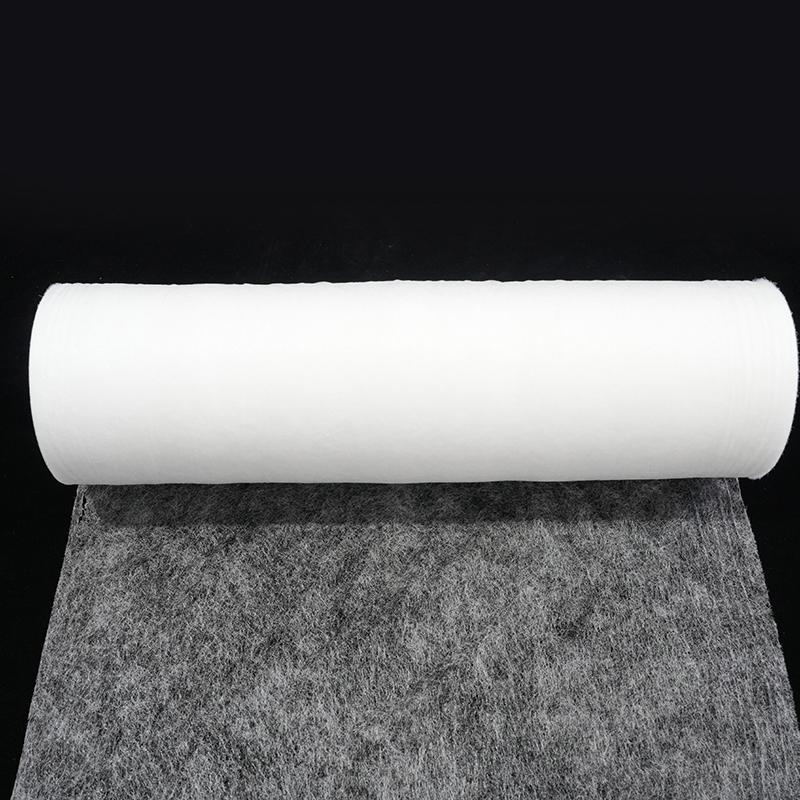
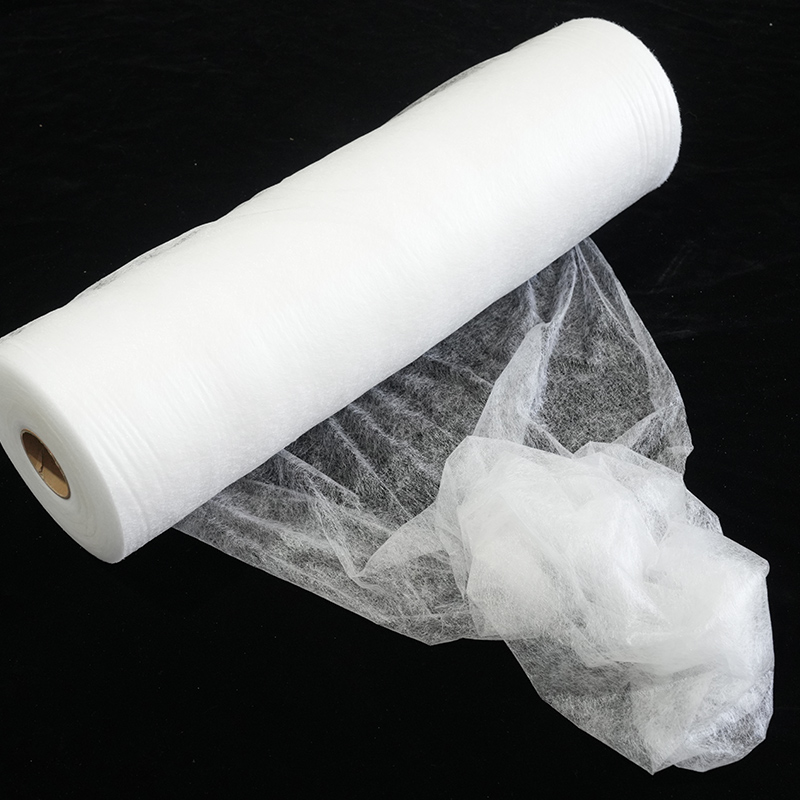
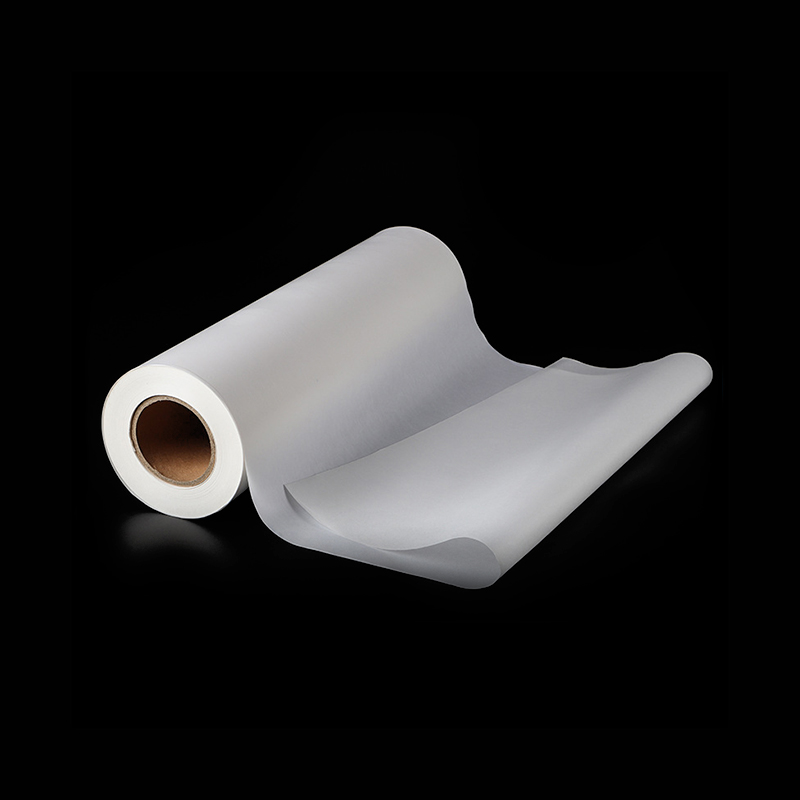
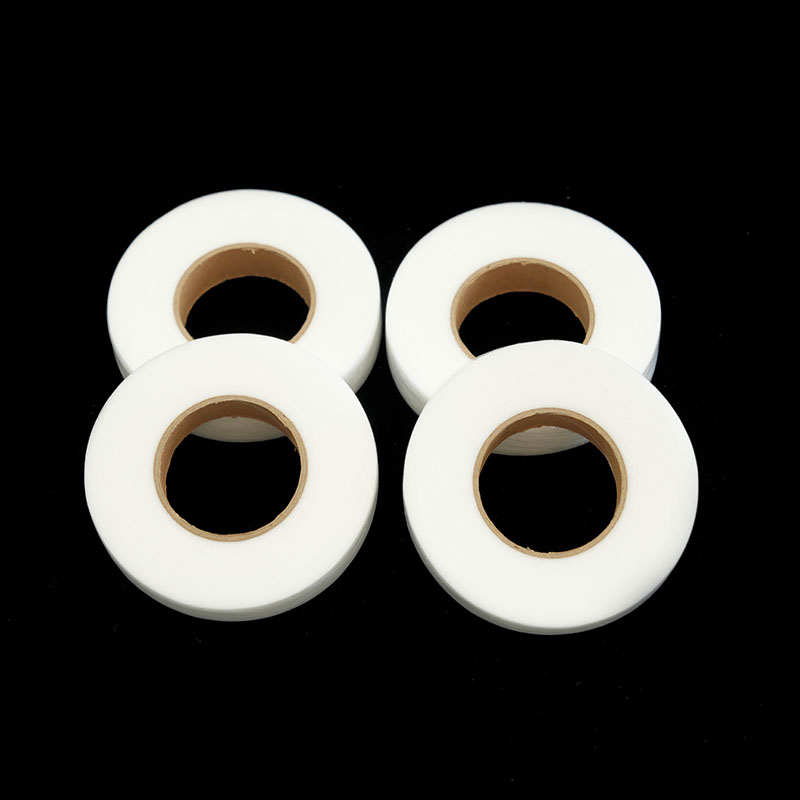 PA Hot Melt Adhesive Web Mesh Film SeriesThis PA web series covers cut-disc and roll formats, plus melting-point, grammage, mesh-pattern, and width options for textile, footwear, automotive, and furniture bonding.View Product →
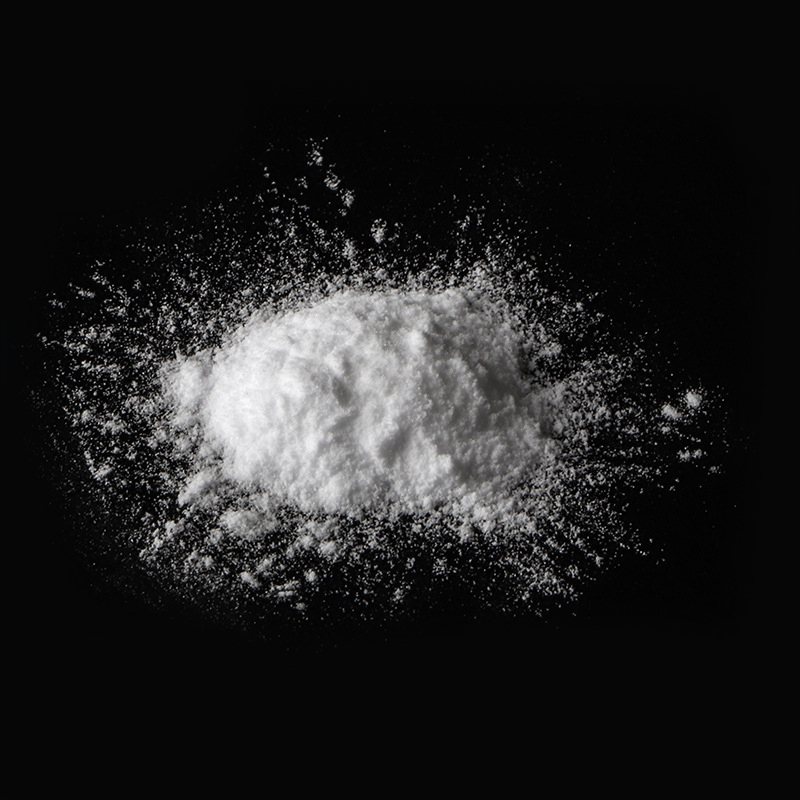
Physical form matters as much as family. The same copolyamide can be supplied as a film, a mesh web or a powder. Films suit flat lamination, webs suit porous or breathable layers, and powders suit three-dimensional parts, spot bonding and processes where the adhesive is scattered onto a surface before heat is applied.
Polarity and Surface Energy: Why Bonds Fail in the First Metre
Adhesion begins with wetting, and wetting is a polarity question. A melt only spreads on a surface it attracts.
| Substrate | Surface character | Preferred chemistry | Practical note |
|---|---|---|---|
| Paper and board | Polar, high surface energy | EVA, PES | Fastest, cheapest bonding route; open time is the main variable |
| PET film | Moderately polar | PES, copolyester | Watch shrinkage and tension at higher application temperatures |
| Polypropylene and polyethylene | Non-polar, roughly 30 mN/m | PO, or polar adhesive with corona treatment | Untreated PP will reject a polar melt no matter how hot it is |
| Plasticised PVC | Polar, but migrating plasticiser | PA | Plasticiser softens EVA bonds over months, not days |
| Steel and aluminium | High surface energy, oxide layer | PES, PA | Cleanliness matters more than chemistry here |
| Cotton and polyester fabric | Polar, porous | PES, PA, TPU | Powder grades penetrate the weave; films can starve the bond line |
When a supplier blames the machine for a weak bond, the first question to ask is whether the melt actually wet the surface. A contact angle you can see with a drop of molten adhesive on the real substrate tells you more than any viscosity figure. The same polar chemistry that makes polyester-based systems reliable on textiles also explains why packaging applications rarely need anything more exotic than EVA.
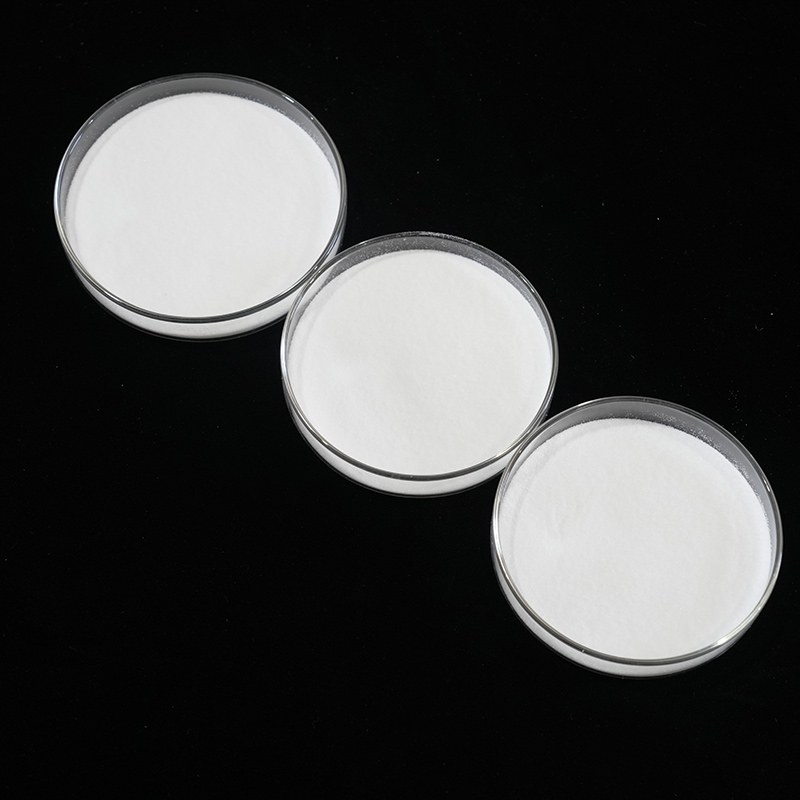 PES Hot Melt Adhesive Powder for Textiles and CompositesCopolyester hot melt adhesive powder for textiles, automotive interiors, filtration, shoe materials, and coatings, suited to porous or irregular parts where heat-activated bonding is needed.View Product →
Porous and irregular parts are the exception where powders win. A copolyester powder scattered on a foam, a filter medium or a moulded interior trim can be activated with heat after assembly, which is impossible with a film already fixed to a release liner.
Melt Viscosity, Molecular Weight and Open Time
Viscosity at the application temperature, not at room temperature, is the number that governs your line speed.
Molecular weight distribution controls how sharply viscosity falls as the pot heats up. A narrow distribution gives a stable, predictable melt and a sharper set; a broad one is cheaper to produce but behaves differently at 150 °C and at 180 °C. Wax lowers viscosity without adding molecular weight, which is why wax-rich formulations run fast and fail early in hot service. Tackifying resin adds grab while the melt is still open, so the joint holds before the press closes.
- A higher application temperature always lowers viscosity; it never improves heat resistance.
- Open time shortens as substrate temperature rises, so a cold winter workshop and a hot summer one need different line settings.
- Hot tack, not final peel strength, decides whether a fast laminator can release tension early.
If a line can only reach 30 m/min with a product rated for 60 m/min, the problem is usually the heat capacity of the substrate, not the adhesive.
Crystallinity, Softening Point and Heat Resistance
Heat resistance comes from crystallinity, not from how hard the adhesive feels at room temperature.
Amorphous polymers such as EVA soften gradually and creep under steady load, which is why a bond that survives a 70 °C oven test can still sag in a car interior over a summer. Semi-crystalline copolyamides and copolyesters hold their structure up to a much sharper transition, so a modest increase in melting point produces a large gain in service temperature. Differential scanning calorimetry shows this directly: a single sharp endotherm means a well-defined melting range, while a broad curve suggests a blend that will soften unpredictably.
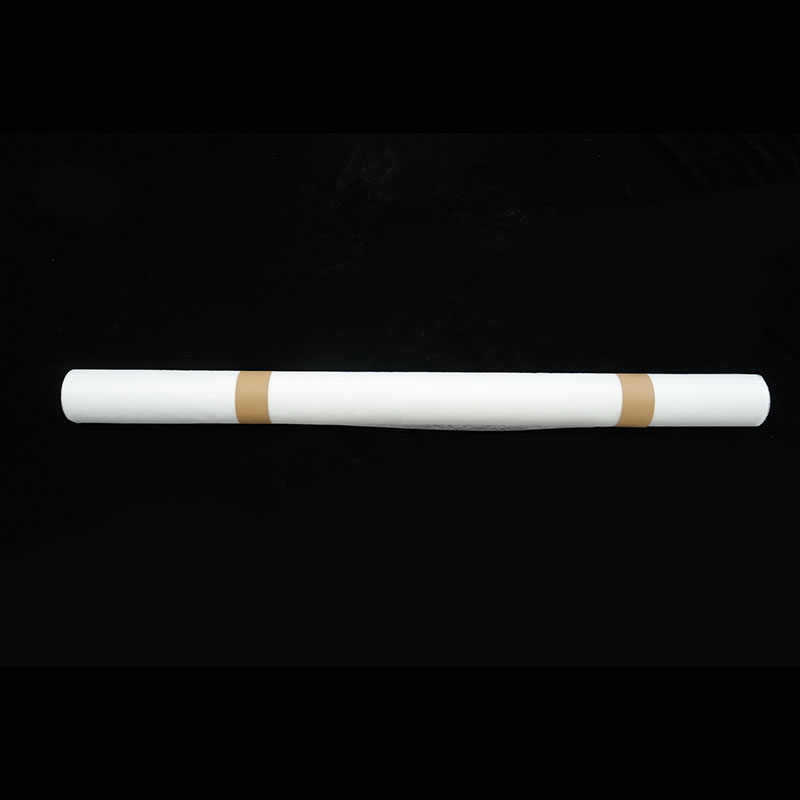
 PES Hot Melt Adhesive Film with Backing PaperCopolyester film with release paper that heat-activates for strong bonding to metal, plastic, and fabric; washable, non-elastic, and melting at 120–130°C.View Product →
For laminates that must survive washing, ironing or engine-bay temperatures, the practical ranking is EVA below copolyester and copolyamide, with polyurethane sitting between them depending on formulation. The trade is always energy: every step up in heat resistance costs pot temperature, dwell time or both.
Thermal Stability: What Happens During an Eight-Hour Shift
The chemistry keeps moving after the adhesive is molten, and that is where the most confusing defects come from.
- Oxidation. Hot polymer plus air forms peroxides and then gels. The stabiliser package buys time; it does not buy unlimited time.
- Viscosity drift. A melt that thickens through the shift changes coating weight and penetration without any change in settings.
- Skin and char. Material left on the tank wall or nozzle lip degrades faster and eventually drops into the bond line as a hard particle.
- Smoke and odour. Usually a sign the pot is running hotter than the formulation was designed for.
A simple hold test settles most arguments: keep a sample at the working temperature for eight hours, then compare viscosity, colour and skin formation against a fresh sample. Lowering the pot temperature by 10 °C often extends usable life more than any additive change.
How to Specify a Hot Melt Adhesive Without a Chemistry Degree
Ask for the polymer type, the application window and the open time before you ask for a price.
- Name the substrates and any surface treatment they receive.
- State the service temperature the finished part will see, including short peaks.
- State the line speed, press pressure and dwell time.
- Ask for the viscosity at your actual application temperature, not at a reference temperature.
- Ask for peel and shear data measured on your substrate, not on steel.
- Check storage conditions, shelf life and moisture sensitivity, especially for polyamide and polyurethane grades.
Test results on steel or on a standard test fabric tell you how the product behaves, not how your product behaves. A supplier that runs trials on the real substrate will usually identify the limiting factor faster than a lab report will; the variables that matter most are reviewed in this breakdown of the factors that affect bonding strength.
Frequently Asked Questions
Is hot melt adhesive the same chemistry as a glue stick?
Broadly yes. A glue stick is an EVA-based hot melt with a high wax content so it stays rigid at room temperature. Industrial grades use the same idea with tighter control of viscosity, open time and heat resistance.
Why does a bond hold in winter and fail in summer?
Because the failure is creep, not adhesion. An amorphous polymer softens gradually as temperature rises and the joint deforms under steady load. Moving to a semi-crystalline copolyamide or copolyester raises the temperature at which that movement begins.
Do hot melt adhesives need solvent or curing?
No. The bond forms purely by cooling, which is why hot melts are free of volatile organic compounds and can be re-melted. That also means heat resistance can never exceed the polymer's own softening behaviour.
Can two hot melt adhesives be blended to get middle properties?
Rarely with predictable results. Two polymers with different polarity and crystallinity usually separate into phases, giving you the weaknesses of both and the strengths of neither. Change grade instead.
What does open time mean in practice?
It is the time between application and the last moment the adhesive can still form a bond. It shrinks as substrate and ambient temperatures rise, so a setting that works in January may need revisiting in July.
Match polarity first, then viscosity, then heat resistance, and most bonding problems resolve into a single identifiable cause. Run the trial on the real substrate, at the real line speed, with the pot at the temperature you will actually use, and the chemistry stops being abstract.



Contact Us