


 English
 中文简体
中文简体 Español
 عربى
عربى
Hot melt adhesive film is specified by locking five variables in writing: polymer chemistry, thickness and grammage with tolerances, the melt and activation windows, bond strength with its test method, and roll format including liner and packaging. Every other line on a data sheet, from core diameter to shelf life, exists to protect those five numbers.
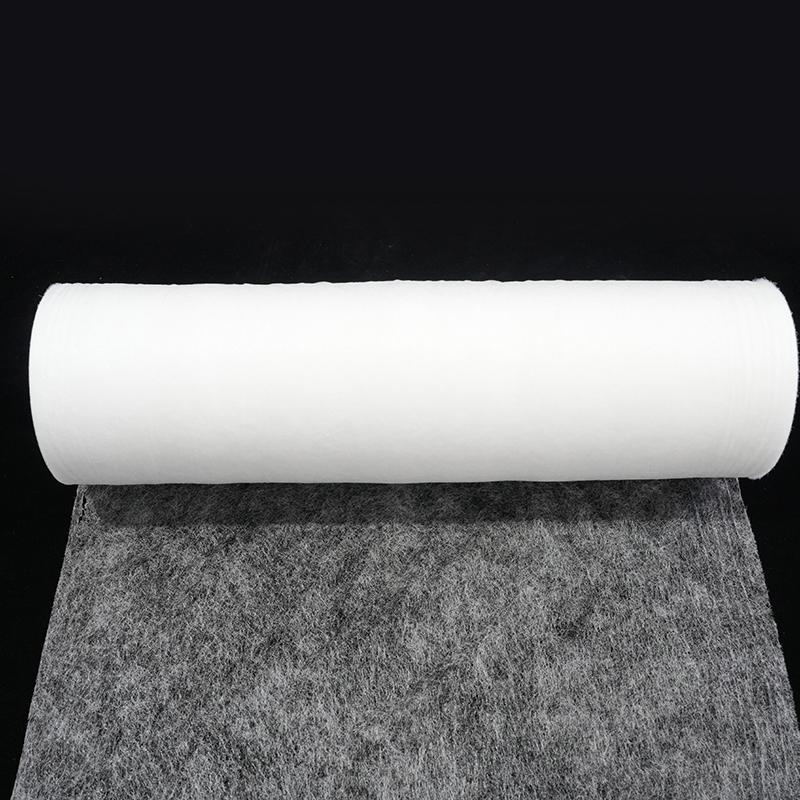
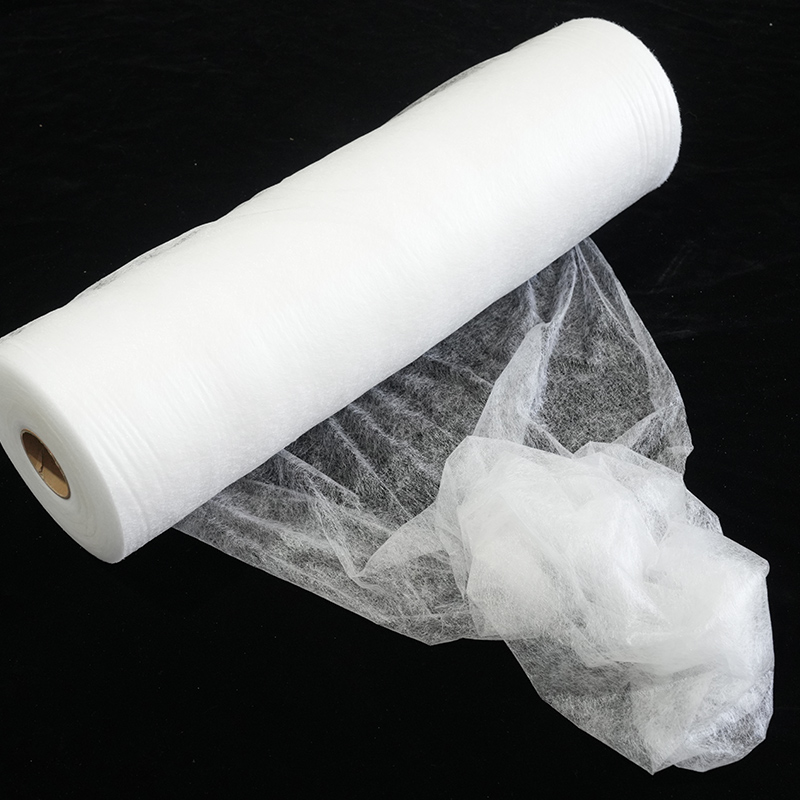
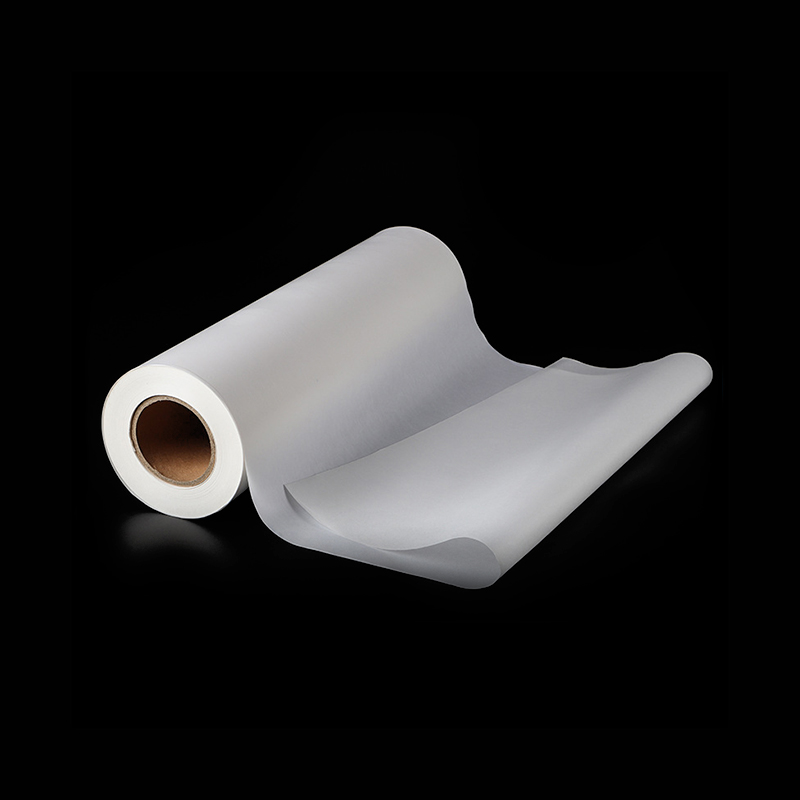
A hot melt adhesive film is a solvent-free thermoplastic sheet, typically 20 to 150 µm thick, dry to the touch at room temperature and activated only by heat plus pressure. Nothing has to evaporate and nothing has to cure, so the bond forms in seconds. That speed is why OEM lines prefer film to liquid adhesive, and also why a loose specification fails quietly rather than loudly.
Most problems we see on OEM projects are specification failures, not material failures: a drawing that says "50 µm film" with no grammage, a softening range quoted without a test method, or a peel value measured on a substrate the customer never bonds.
Content
- Five Numbers That Carry the Whole Specification
- Match the Polymer to the Substrate and the Line Temperature
- Thickness, Grammage and Roll Format: Specify Tolerances, Not Averages
- The Specification Sheet: Fields, Example Entries and the Cost of Leaving Them Out
- Test Methods: Make the Result Comparable
- Six Specification Mistakes That Appear Later as Production Stops
- From Trial Roll to Production Release
- Frequently Asked Questions
Five Numbers That Carry the Whole Specification
Five numbers do roughly eighty percent of the work: chemistry, grammage, melt window, activation window, and bond strength with a named method. Get them right and the rest is detail; get them wrong and no amount of detail rescues the project.
- Chemistry. EVA, PA, PES or TPU. This one decision fixes adhesion, temperature resistance, wash resistance and cost, and it cannot be fixed later by changing thickness.
- Grammage. Stated in g/m² with a tolerance, not only in micrometres. Two films of identical thickness can deliver different adhesive mass to the bond line.
- Melt window. The range over which the polymer flows, normally expressed as a DSC peak range rather than a single melting point.
- Activation window. The temperature, pressure and dwell time your press requires, which must fit the machine you already own.
- Bond strength. A number, a substrate and a method. "Good adhesion" is not an acceptance criterion.
Match the Polymer to the Substrate and the Line Temperature
Polymer choice is driven by three constraints, in this order: the substrate's heat tolerance, the chemistry's adhesion to that substrate, and the conditions the finished part must survive, such as washing, heat, plasticiser migration and humidity. Price comes last.
| Chemistry | Typical activation range | Common OEM substrates | Watch out for |
|---|---|---|---|
| EVA | 70–95 °C | Paper, foam, films, nonwovens, low-temperature textile bonding | Limited heat and chemical resistance; unsuitable for hot-wash or automotive service |
| PA (polyamide) | 110–140 °C | Textiles, leather, metal inserts, automotive trim, shoe components | Needs a hotter press; moisture sensitive in storage |
| PES (copolyester) | 110–150 °C | Textile lamination, footwear, automotive interiors, filtration media | Hydrolyses when stored warm and damp; keep rolls sealed |
| TPU | 90–130 °C | Stretch fabrics, membranes, shoe uppers, phone cases, elastic composites | Higher cost; tack can complicate liner release |
Temperature resistance usually decides the case. A trim part that reaches 80 °C inside a parked vehicle cannot use a low-temperature EVA film, however well it bonds on the bench. In automotive interior laminating, PA and PES films dominate because they tolerate both the press temperature and the years of heat that follow.
If the bonded assembly has to stretch with the substrate, such as a sports shoe upper or an elastic membrane, a TPU film is normally the answer, because a stiff adhesive layer will crack or delaminate when the composite flexes.
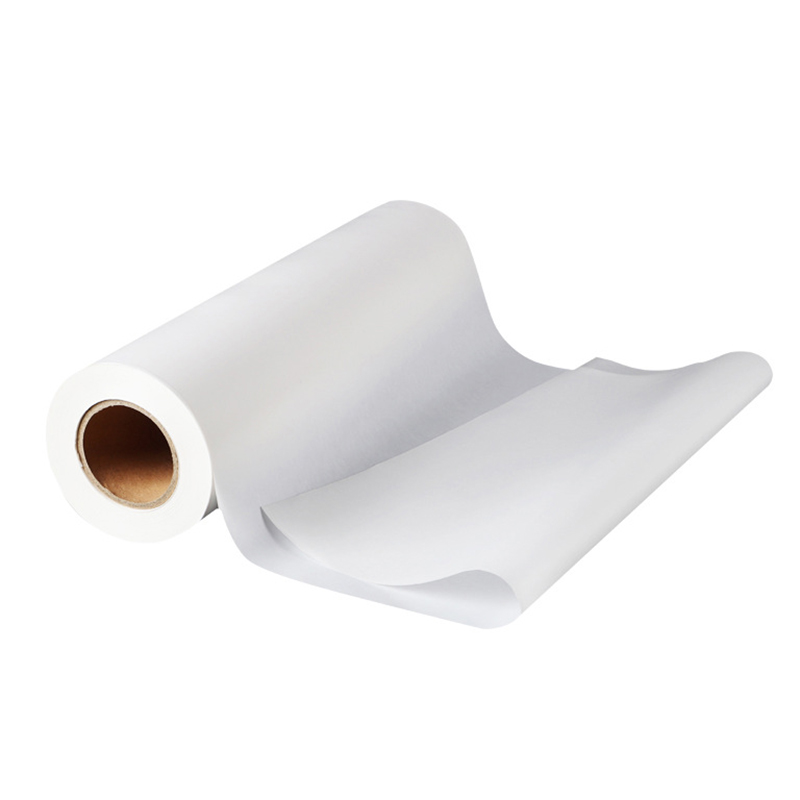 TPU hot melt adhesive film with backing paper elasticityProduct Introduction: This TPU hot melt adhesive film with backing paper elasticity has environmentally friendly adhesive properties, which not only pursue efficient b...View Product →
Thickness, Grammage and Roll Format: Specify Tolerances, Not Averages
A thickness figure without a tolerance band and a roll format describes a sample, not a purchase specification; the tolerances decide whether the roll runs on your line.
- Grammage: 60 g/m² ± 5%, for example. Tighter than ± 5% is achievable, but it should be justified by the bond line rather than requested by habit.
- Thickness: 50 µm ± 5%, measured at five points across the web.
- Width: 1,520 mm with a stated one-sided tolerance, because a web that is 3 mm narrow can leave an unglued edge strip.
- Roll length and core: 500 m on a 152 mm core, splice-free, with roll diameter recorded.
- Release liner: type, weight, whether one or both sides are siliconised, and the release force your feeder needs.
Liner behaviour deserves more attention than it usually receives. A liner that peels too easily lifts before the film reaches the nip; one that peels too hard stretches and wrinkles the film. A film supplied with a controlled backing paper removes that variable from the line.
 PES hot melt adhesive film with backing paperProduct Introduction: PES hot melt adhesive film with backing paper is an environmentally friendly adhesive. Through advanced scraping, coating, or blow molding proces...View Product →
The Specification Sheet: Fields, Example Entries and the Cost of Leaving Them Out
A film specification is complete when a supplier can quote from it and a quality engineer can reject a lot against it without asking a single question, which means every field carries a number, a tolerance and a method.
| Field | Example entry | What it prevents |
|---|---|---|
| Chemistry and grade | PES copolyester film, MFI 25 ± 5 g/10 min at 160 °C / 2.16 kg | Silent reformulation and drifting flow behaviour |
| Grammage | 60 g/m² ± 5% | Starved or flooded bond lines |
| Thickness | 50 µm ± 5%, five measurement points | Disputes over the measurement method |
| Melt window | DSC peak 115–125 °C | A film that needs more heat than the press can give |
| Activation window | 135 °C, 3 bar, 15 s, verified on your line | Cold bonds blamed on the adhesive |
| Bond strength | T-peel ≥ 8 N/25 mm on the reference substrate, ASTM D1876 | Arguments without a shared reference |
| Format | 1,520 mm wide, 500 m roll, 152 mm core, splice-free | Web breaks and edge waste |
| Storage and shelf life | 12 months sealed at ≤ 25 °C and ≤ 60% RH | Hydrolysis and blocking in the warehouse |
| Compliance | REACH SVHC declaration, RoHS, OEKO-TEX 100 class II where relevant | Rejected shipments and blocked customs files |
| Change control | Written notice and re-qualification before any resin or MFI change | Performance drift between shipments |
Test Methods: Make the Result Comparable
An acceptance criterion is only usable when it names the standard, the substrate, the sample width and the conditioning, because a peel number without those four facts cannot be reproduced by anyone else.
- Peel strength: 180° peel per ASTM D903, or T-peel per ASTM D1876 for flexible-to-flexible laminates.
- Shear and creep: static shear at service temperature to predict sagging trim and creeping labels.
- Thermal behaviour: DSC per ISO 11357-3 or ASTM E794, to confirm the melt peak and detect batch drift.
- Durability: wash and dry-clean cycles per ISO 3175 where the end product is a garment or a shoe.
- Line trial: the same peel test repeated at three temperatures and three dwell times, which produces the process window production will actually run.
Six Specification Mistakes That Appear Later as Production Stops
Stoppages traced back to film usually begin as missing clauses rather than defective rolls.
- Specifying thickness only. Two suppliers can both meet 50 µm and still deliver different adhesive mass per square metre.
- Copying a competitor's data sheet. Those values were measured on a different substrate and a different press.
- Ignoring the press you already own. If the film needs 150 °C and the line tops out at 120 °C, the specification is dead on paper.
- Leaving the liner to chance. Automatic feeders are far less forgiving than manual lay-up.
- Approving a single sample. One good roll says little about the tenth, and the same discipline matters when you integrate film with automated production lines, where dwell time and nip pressure stop being adjustable by hand.
- No change control. A new resin supplier can shift the melt flow index without changing the headline on the data sheet.
From Trial Roll to Production Release
Approve a process window, not a single roll: run the trial at three temperatures and three dwell times and record the peel result at each point, so production has a map instead of a guess.
- Trial roll: 50 to 100 m is usually enough for setup, running loss and laboratory testing.
- First article: verify grammage, thickness, width, release force and peel strength against the specification before the first production order.
- Retention samples: keep one metre of every lot, sealed, for the shelf-life period.
- Certificate of analysis: per lot, with measured values rather than a simple "conforms".
- Re-qualification triggers: resin change, MFI change, higher line speed, new substrate batch.
Frequently Asked Questions
What thickness of hot melt adhesive film should I specify for OEM production?
Start from the bond line rather than the catalogue: 25 to 50 µm suits smooth, well-matched substrates, while 75 to 150 µm is used where a surface is rough, porous or needs gap filling. Then confirm grammage, because that controls the adhesive mass in the joint.
Do I need a release liner on the film?
Only if the film would otherwise block on the roll or if your process feeds film automatically. Liner-free film is cheaper and works well for manual lay-up with immediate use, while a controlled backing paper is safer for automated feeding and for film stored for months.
How do I set an acceptance criterion for bond strength?
Bond the film to the exact production substrate at production settings, test it by a named method such as ASTM D1876, and set the minimum from the lowest result of at least five specimens across three lots. A single bench sample is not a basis for a purchase specification.
Can one film cover several different products?
Sometimes, but only when substrates, press settings and durability requirements overlap. A PES film that laminates automotive trim rarely suits a low-temperature foam bond, and forcing one grade across both usually produces a compromise that fails in one application.
What causes film to fail on a line that previously ran without problems?
Usually a change elsewhere in the process: slower line speed, a colder platen, a thicker substrate or a new material lot. Film is sensitive to dwell time and pressure, so when the process shifts, the process window has to be re-verified rather than assumed.
A workable film specification is short: five numbers, a tolerance block, a test method for every claim and a change-control clause. Write it before the first trial roll, review it with the supplier's technical team, and freeze it once production is stable, so that any future deviation becomes visible immediately instead of surfacing as a delamination complaint six months later.


Contact Us